Silt Fence Installation Services in Grand Forks, ND
Silt Fence Installation Kings provides silt fence installation, wire-backed silt fence installation, and silt fence repair and removal services in the Grand Forks, ND area for both residential and commercial properties, from single house lots to large construction sites. Contact us now for a free estimate.
How Much Does Silt Fence Installation Cost in Grand Forks, ND?
Silt fence installation in Grand Forks, ND costs anywhere from $480 to $1,940 on average for a house lot or small site perimeter of about 150 to 300 linear feet. The price depends on the total length, slope and soil, standard or wire-backed fabric, stake type and spacing, site access, and whether removal at the end of the job is included.
Do You Install Silt Fence for Homeowners and Builders?
Yes, we install silt fence for homeowners, home builders, general contractors, developers, and commercial sites. Let us know whether it's a single lot or a larger site and who is managing the project.
Do You Service My Area?
Yes, we cover the Grand Forks, ND area. Send us the property address and we'll confirm.
Can You Put Silt Fence Along the English Coulee in Grand Forks?
Yes, we run it parallel to the coulee, never across it, because silt fence isn't made for flowing water. Grand Forks lies in the flat Red River Valley and is prone to flooding, so fence near the English Coulee or the Red River can end up in high water. We check it after floods and reset sections that wash out.
Does My Building Permit Require Silt Fence?
Yes, in many towns new homes, additions, and other permitted earthwork need silt fence or another perimeter control. Your local building or stormwater office decides, so send us the permit and we'll check what it calls for.
Do I Need Silt Fence if I Disturb Less Than an Acre?
Yes, often. The federal stormwater permit starts at 1 acre, or less when the lot is part of a larger development, but many counties require sediment controls on much smaller jobs. We can tell you what's usually required locally.
How Soon Can You Install Silt Fence?
We can usually install within a few days of your call. Tell us the date clearing or grading is set to start, or the date of your inspection, so the fence is up before any soil is disturbed.
Can You Have Silt Fence Up Before My Pre-Construction Inspection?
Yes, that's one of the most common reasons we get called. Many inspectors want perimeter controls in place before dirt moves, so send us the inspection date and the approved plan.
What Information Do You Need for a Silt Fence Quote?
We need the site address, the approximate length of fence, and your erosion control plan or site plan if you have one. Photos of the slope and any ditches, creeks, or storm drains nearby help too.
Can You Install Silt Fence Exactly as Shown on My Erosion Control Plan?
Yes, we follow the approved plan or SWPPP for the fence line, type of fence, and any double rows or J-hooks. If something on the plan won't work in the field, we tell you before installing.
Where Should Silt Fence Go on My Lot?
On the downhill side of the disturbed area, following the contour of the ground. We keep each run to about a quarter acre of drainage, so larger sites get several runs.
Will I Need to Be on Site During Installation?
No, as long as the property lines or fence line are marked and we can reach the work area. It helps to walk the line with us first if there's no plan.
Can I Get a Price Before the Work Begins?
Yes, we give you a price before starting. We'll also say whether removal, repairs after storms, and sediment cleanout are included or priced separately, since those are where quotes most often differ.
Do You Charge by the Linear Foot?
Yes, we price silt fence by the linear foot, usually $3 to $8 a foot installed. Wire backing, heavy-duty fabric, rocky ground, steep slopes, and removal at the end raise the rate.
Is There a Minimum Charge for a Short Run of Silt Fence?
Yes, most installers have a minimum because the crew, truck, and equipment cost the same to bring out. Runs under 100 feet often land around $250 to $600.
How Long Does Silt Fence Installation Take?
We finish a typical house lot in a few hours to a day. Long runs on open ground go fast with a slicing machine, while rock, trees, and tight spots that need hand work take longer.
Can You Install Silt Fence for a Pool, Driveway, or Addition?
Yes, smaller residential projects like pools, driveways, additions, and septic work often need a short run of silt fence. Tell us where the digging is and which way the yard drains.
Can You Install Silt Fence for a Demolition or Lot Clearing Job?
Yes, demolition and clearing leave bare soil, so many permits require silt fence before work starts. Send us the demo or clearing permit if it lists erosion control requirements.
Can You Install Silt Fence on a Subdivision or Multi-Lot Site?
Yes, we install perimeter fence for subdivisions and can fence individual lots as each phase opens. Send us the plan sheets and tell us how many lots or phases are involved.
Can You Install Wire-Backed Silt Fence?
Yes, we install silt fence with welded wire or chain link backing, often called super silt fence, for heavy rain, long slopes, or heavy sediment loads. Backing can roughly double the cost of standard fence.
Can You Install Silt Fence on a Steep Slope?
Yes, but on a long steep slope we usually place one row near the top and another 6 to 10 feet from the bottom. Very steep slopes also need blankets or other erosion control, since silt fence alone won't hold them.
Can You Install Silt Fence Near a Creek, Pond, or Wetland?
Yes, we run fence parallel to the water to catch sediment before it gets there, and some permits call for a double row about 5 feet apart. Work in the water or wetland itself usually needs separate approval.
Can You Put Silt Fence Across a Ditch or Drainage Swale?
No, silt fence isn't made for flowing water and will wash out or blow over in a ditch. Concentrated flow needs check dams or another channel control, which we can point you to.
Can You Put Silt Fence Around a Dirt Stockpile?
Yes, we fence the downhill side of the pile so you can still get to it from the uphill side. Tell us how big the pile is and how long it will sit.
Can You Install Silt Fence Around a Storm Drain Inlet?
Yes, we set fence on the inlet side of storm drains and culverts.
Can You Install Silt Fence in Rocky or Hard Ground?
Yes, though rock slows trenching and driving posts, which adds to the price. Where the fabric can't be buried properly, we may suggest another type of barrier for that stretch.
Can You Fix Silt Fence That Failed an Inspection?
Yes, we repair or replace fence that's undercut, sagging, torn, or knocked down by equipment. Send us the inspection report or photos and the date the fix has to be done by.
Why Is Water Going Under My Silt Fence?
Usually because the bottom edge wasn't buried and compacted, so runoff undercuts it. Water also runs around fences without turned-up ends, and through fence set across a ditch. Send us photos and we'll tell you what needs fixing.
Do You Inspect and Maintain Silt Fence After Storms?
Yes, we can check and repair fence after storms. The federal construction permit often requires an inspection within 24 hours of a quarter inch of rain, so ask us about a maintenance schedule.
When Does Sediment Need to Be Cleaned Out From Behind the Fence?
When it reaches half the fence height. We clean it out or add another row.
Do I Need to Call 811 Before You Install Silt Fence?
No, we place the 811 request as the installer, since posts go about 2 feet deep. Point out private lines like irrigation, septic, or landscape lighting, because public locates usually don't mark those.
Which Is Better for Silt Fence, Trenching or Slicing?
Slicing usually holds better. It pushes the fabric about 12 inches into the ground and compacts both sides, while trenching digs about 6 inches deep and is what we use around tight turns and obstacles.
How Deep Do You Bury the Bottom of the Fabric?
We bury it at least 6 inches, which many local codes require, and about 12 inches with a slicing machine. The buried edge is compacted so water can't run underneath.
What Kind of Stakes Do You Use for Silt Fence?
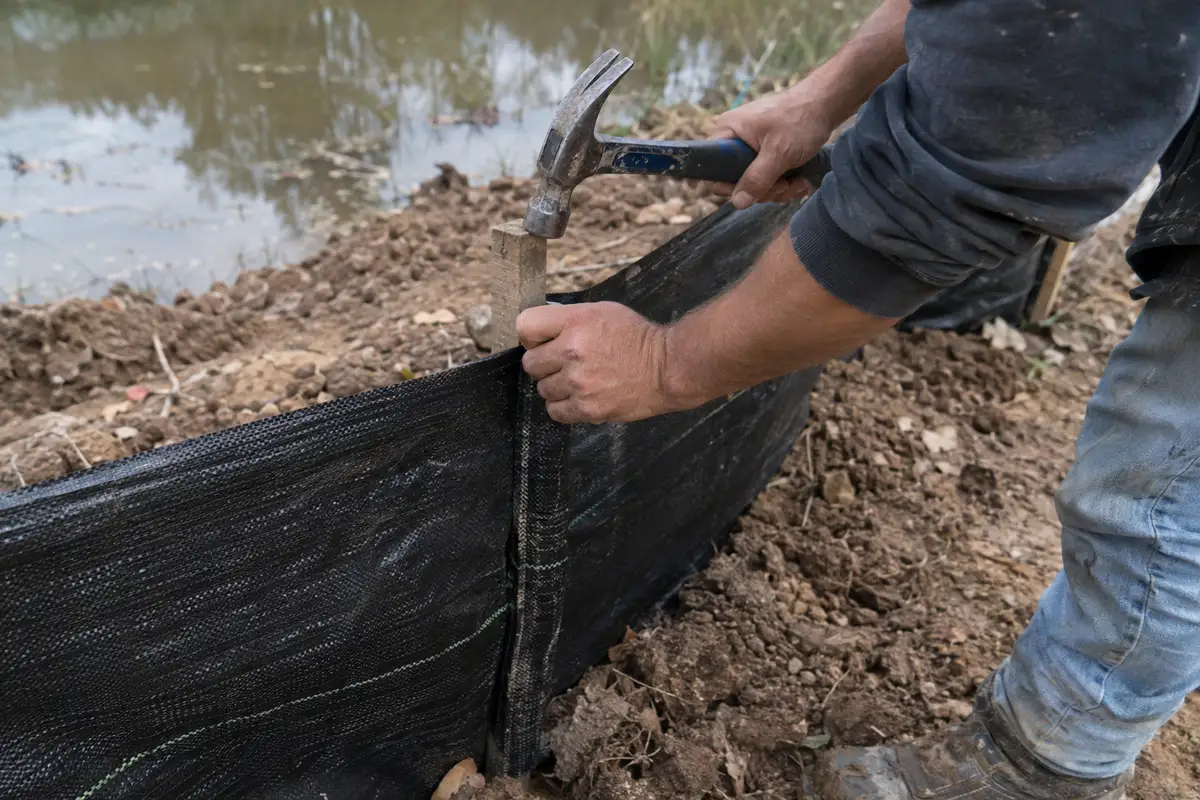
Steel posts in most cases, because they drive deeper into compacted soil and last longer. Wood stakes are cheaper but can break or rot within months, so we use them only where the plan allows.
How Far Apart Do You Space the Posts?
About 5 feet apart, or 3 to 4 feet where water may top it.
Why Do the Ends of a Silt Fence Turn Uphill?
Turning the ends up the slope, called J-hooks, keeps water from running around the fence. It also breaks long runs into pockets that each hold their own sediment.
Can I Install Silt Fence Myself?
Yes, a short run on flat ground is doable. Store-bought kits are often light duty, and the hard part is burying and compacting the bottom edge. We can fix or redo a run that fails.
Is a Straw Wattle or Compost Sock Better Than Silt Fence?
No, not usually for a site perimeter. We use wattles and socks on slopes, around inlets, and on pavement where you can't dig, and they typically cost more per foot.
How Long Does Silt Fence Last?
It lasts as long as it's maintained, and most comes down once the site is stabilized. Wood stakes can rot or break within months, so we replace them and any torn fabric as needed.
When Can the Silt Fence Come Down?
Once the site is permanently stabilized, usually with grass or other cover established. Ask your inspector before taking it down.
Do You Remove Silt Fence When the Job Is Done?
Yes, we pull the fabric and posts, spread the trapped sediment, and leave the strip ready to seed. Removal typically runs about $1 to $4 a foot if it wasn't in the original quote.
